Andhra's 34% BC Quota Dream Hit by SC

In a setback to the Andhra Pradesh government, the Supreme Court on Friday dismissed its plea challenging the Andhra Pradesh High Court ruling that struck down 34 per cent reservation for Backward Classes (BCs) in local body elections.
A Bench of Justices Dipankar Datta and Sheel Nagu questioned the legal basis of the data relied upon by the state government to justify the enhanced BC quota, particularly the findings of a Unified Family Survey.
Senior advocate Mukul Rohatgi, appearing for the Andhra Pradesh government, submitted that there was no reason for the High Court to reject the data as unreliable. However, the Justice Datta-led Bench asked the state government to demonstrate where the High Court had erred in holding that the survey data could not form the basis for determining reservation.
“You show us that this data can be considered. This is a Unified Family Survey -- under what law is this being conducted?” the apex court remarked before dismissing the plea, questioning the legal basis for relying on the survey data to justify the enhanced reservation.
On October 1, the Andhra Pradesh High Court struck down two government orders providing 34 per cent reservation for BCs in local body elections, holding that the quota breached the 50 per cent ceiling on total reservations.
The High Court observed that the aggregate reservation for all categories in local bodies should not exceed 50 per cent in accordance with the Supreme Court's guidelines.
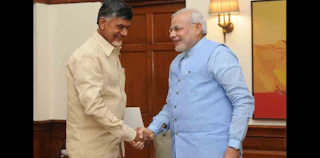
The ruling came as a setback to the Chandrababu Naidu-led coalition government, as increasing BC reservation in local bodies from 20 per cent to 34 per cent was one of its key promises during the 2024 Assembly elections.
Chief Minister N. Chandrababu Naidu had announced the enhanced quota on August 18, stating that BCs would get 34 per cent reservation in rural local bodies and 33.33 per cent in urban local bodies.
Following the High Court's ruling, CM Naidu directed officials to immediately approach the Supreme Court to challenge the decision.
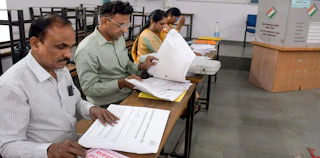
The High Court had also directed the state government and the State Election Commission to initiate the process for local body elections within six weeks. It dismissed petitions seeking a direction to conduct the elections only after completion of the ongoing Special Intensive Revision (SIR) of electoral rolls in the state.












Comments (…)
Leave a Comment