BRICS Summit: Game Of Elite Proximity
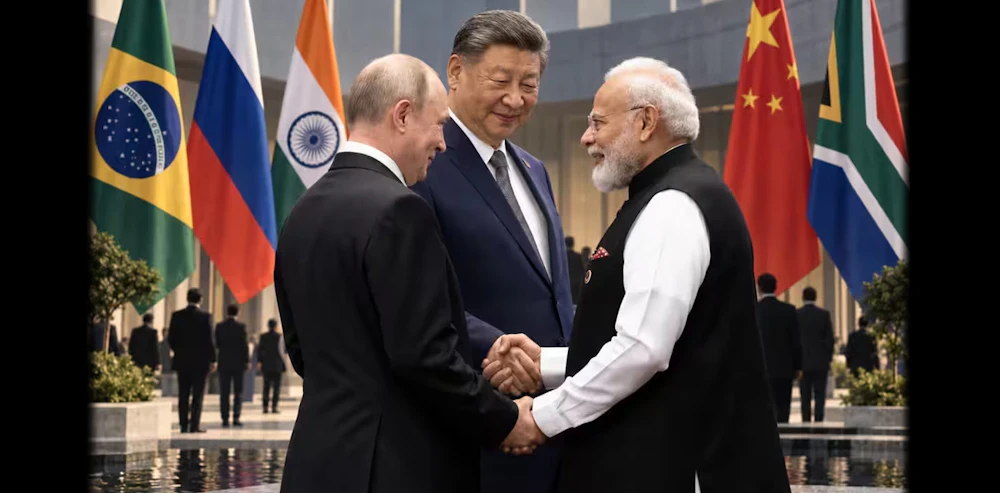
"In the architecture of asymmetric alliances, regional powers often confuse proximity to the core with an equity of influence, mistaking the toleration of their presence for strategic partnership."— Inspired by Realist International Relations Theory (Neo-realism)
What the above statement suggests is that “In unequal global alliances, smaller nations often confuse proximity to power with actual influence, mistaking a photo-op for a true partnership. In plain terms: being allowed to stand next to the boss, smile for the cameras, and shake hands doesn't make you an equal player; it just means you have been cast as a prop in someone else’s game.”
Recall an Arabian folklore in which an arrogant village chief spent weeks throwing lavish feasts, loudly drumbeating his new, "top-secret brotherhood" with the Sultan. According to the Chief, the ruler valued his counsel so deeply that he had entrusted him with the care of the prized royal camel. In reality, the Sultan and his trickster advisor Nasruddin didn't care a wit for the Chief’s wisdom; they just needed a gullible local fool to feed and clean up after a foul-tempered, spitting beast for free. The grand illusion of royal intimacy dissolved the moment the animal completely trashed the Chief’s expensive, silk-lined barn and bit him square on the nose, proving that in the high-stakes game of elite proximity, the self-trumpeter is usually just the one left holding the shovel.
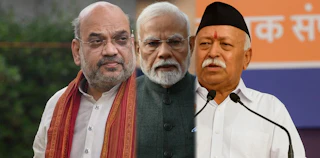
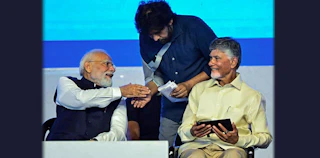
The above game of elite proximity is being played out with meticulously choreographed theatrics at the BRICS Summit, the grand theatre of New World Order Diplomacy, where the warm handshakes and tight hand-holding between India’s supreme leader and the rulers of Russia and China are projected as an unshakeable Asian brotherhood.
This spectacle perfectly mirrors the old fable of the arrogant village chief who loudly drumbeat his "top-secret intimacy" with the Sultan. the supreme leader, almost enacting the village Chief, desperate to distract from ebbing popularity at home, eagerly offered India’s noble assistance to mediate the Russia-Ukraine conflict, projecting himself as the ultimate global peacemaker for domestic political gain.
Yet, this grand mediation offer is a deeply self-appreciating publicity stunt that willfully ignores the realities of Vladimir Putin's strategic self-interest and the trap of personalized rule.
More than four years after launching his full-scale invasion, Putin's greatest problem is no longer winning the war, but finding a way to stop it on his own terms. Unlike democratic leaders who can lose elections and comfortably pivot their policies, autocrats who have deeply personalized a war cannot separate their political survival from its outcome. The longer the conflict drags on, the more impossible compromise becomes, because the staggering human and economic costs incurred demand an even larger, mythical justification. Russia remains a formidable military machine with vast manpower and a relentless capacity for domestic repression.
For Putin, any peace that leaves Ukraine independent or fails to deliver his territorial objectives would look less like a compromise and more like a humiliating, regime-threatening admission of failure.
To compound the absurdity, this highly publicized tripartite handshake dynamic completely ignores the glaring elephant or rather, the dragon, in the room.
While the domestic spin machinery projects these summits as a gathering of equal global titans, the hard reality is that China's Xi Jinping views India's theatrical peace overtures with quiet, patronizing amusement. To Beijing, New Delhi is not a co-equal architect of a new global order, but a junior neighbor trapped in a massive structural trade deficit, trying to smile through lingering border tensions.
Moscow, heavily sanctioned and entirely dependent on Beijing to keep its economy afloat, knows exactly who holds the purse strings. For all the meticulously timed photographs of shared handshakes, the true dynamic resembles a pair of cold, calculating autocrats letting the enthusiastically smiling village chief hold the camel's leash, fully aware that his "global influence" is just a permission slip to stand in the frame.
Now let us foresee the possible final act of this diplomatic farce, without sounding cynical: It is delightfully absurd to premise how the Indian leadership feels optimistic about out-negotiating a global arena where even Trump’s transactional bluster failed to move the needle. In reality, Trump, who remains famously obsessed with securing the Nobel Peace Prize and boasts about "ending eight wars", will be the last person on Earth to play a mute witness while New Delhi attempts to hog the international applause.
The moment India tries to position itself as the master broker, Trump, sure to play the rogue camel of the Arabian folklore and is bound to aggressively crowd the stage, micro-managing the spotlight to ensure no one else walks away with the ultimate prize.
Ultimately, the lofty offer to mediate begins to sound less like masterclass diplomacy and more like a high-budget, live-action spin-off of the famous "War rukwadi, Papa" campaign, designed entirely for the consumption of domestic television audiences who are eager to believe that global superpowers pause their existential conflicts at New Delhi's behest.
And for the ultimate irony of the spectacle, one is reminded of the popular idiom: "Tum karo toh Raasleela, hum karein toh character dheela" ("When you do it, it's a divine dance; when I do it, it's a moral failing").
The grand illusion finally collapses into stark irony when compared to regional dynamics. When neighboring Pakistan attempted its own peace diplomacy to de-escalate regional tensions, the dominant domestic narrative dismissed it with contempt as the desperate meddling of a Dalal (broker). But when India engages in identical, empty posturing with unyielding global dictators, it is heralded at home as the profound work of a master statesman.
In the end, just as the village chief found himself holding a shovel for a foul-tempered beast, the illusion of global intimacy evaporates under the glare of realpolitik, proving that no matter how tightly hands are held on the world stage, the self-trumpeter is usually just the one left cleaning up the mess.