Dust On The Face, Blame On The Mirror
“To talk much and arrive nowhere is the same as climbing a tree to catch a fish”
In essence, this ancient Chinese wisdom warns that endless speeches without real results are futile.
In politics, it means big promises and loud rhetoric achieve nothing when the basic policy is flawed from the start. Climbing a tree takes plenty of effort, sure, just like hosting grand summits and giving marathon speeches, but it won't put a single fish in the net.
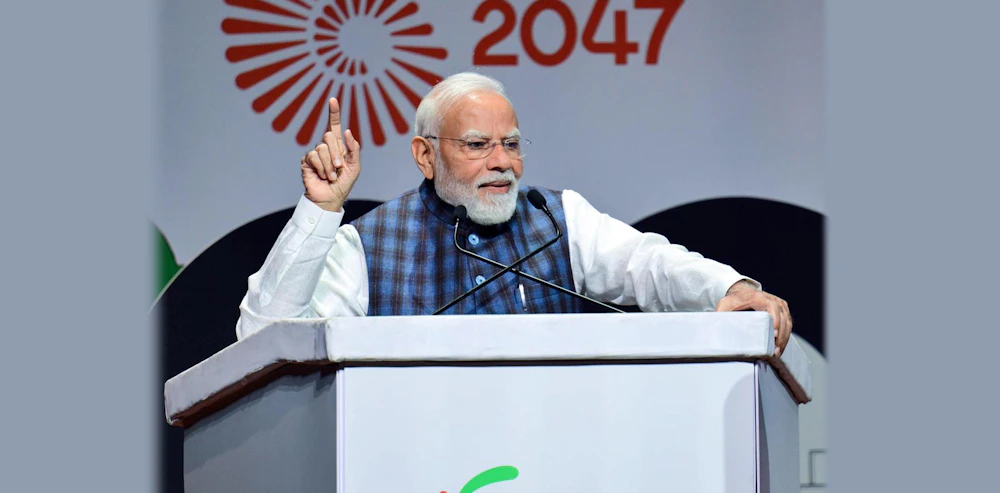
When India's "Supreme Leader" took umbrage at big corporations for not turning massive tax breaks into new jobs, factories, or higher wages, it was a textbook case of climbing the wrong tree. Handing out freebies to the wealthy and expecting them to magically trickle down to the working class isn't a strategy; it's just political theatre.
His outrage might sound justified on paper, after all, big business gladly pocketed the government's generous tax cuts without holding up their end of the bargain.
To be fair, he isn't wrong about the symptoms of India’s economic disease. Since 2019, the government has handed over nearly $100 billion in corporate tax cuts, a massive gamble rooted in a blind faith in "trickle-down" economics: the naive hope that stuffing corporate coffers would automatically spark new investments and create millions of jobs.
Yet, in a twist of political irony, this public scolding backfired. Instead of shifting the blame, his outburst accidentally poked a hole in the carefully crafted, decade-long illusion of an unstoppable economic boom under his rule. Ultimately, this reprimand sounded less like a stern warning and more like an accidental confession, an admission that, despite over a decade in power, his administration had failed to fix the deep-rooted economic problems left behind by past governments.
It also laid bare an uncomfortable truth: either he fundamentally misunderstands how private business actually works, or he is simply scrambling for a convenient scapegoat as the country's economic troubles pile up. The carefully tailored political swagger, once wrapped in the dazzling robes of a self-proclaimed Vishwaguru, now lies in tatters, leaving behind a leader who looks far less like a supreme commander and much more like a bundle of nerves. When a leader fails to deliver on his own promises, the oldest trick in the political playbook is to point fingers and scold others for his shortcomings, which is exactly what this sudden attack on the business community looks like.
Even after twelve years of blaming Nehru for every modern ill, he still hasn't learned the art of self-reflection, preferring instead to keep playing the same old blame game.
As Prime Minister, he ought to know that a sluggish economy isn't a corporate failure; it is a failure of governance. It is the job of political leadership to set a clear economic direction, create the right conditions for innovation to thrive, and guarantee a fair, competitive playing field, not to sit on the sidelines and scold businesses when the trees refuse to yield fish.
Yet, when Gen-Z voices dared to express their frustration over a decade of sluggish private-sector job growth, the official response wasn't sympathy, it was a familiar label: "anti-nationals" allegedly acting on the orders of foreign forces.
Back in 2014, he unveiled the grand Make in India campaign with pomp and rhetoric. Twelve years later, forget any big leap, manufacturing's share of the economy has actually shrunk. Looking at that scorecard, one can almost understand why he lashed out at corporate India for its supposed "betrayal."
Yet crying "corporate betrayal" is merely playing to the gallery, deflecting from the real culprits: his own self-inflicted economic shocks. Overnight demonetization wiped out the nation's cash reserves in a flash, crippling both formal and informal businesses, while a sudden, unplanned nationwide lockdown left workers and industries stranded. When policy arrives like a bolt from the blue, expansion plans get shelved, payrolls get slashed, and boardrooms quickly learn never to bet big again.
The deepest root of this crisis, however, is crony capitalism, the defining hallmark of his political doctrine. While sidelining the unorganized sector, which serves as the true engine of everyday employment, his administration has fiercely championed a favored inner circle of big-business allies dating back to his days in Gujarat.
In the end, pointing fingers at boardrooms cannot wash away a decade of policy missteps. You cannot sow the seeds of erratic governance, cronyism, and shock therapy, and then scold the harvest for failing to grow. As a classic Urdu couplet reminds us of those who blame the world while ignoring their own reflection: "Umr bhar Ghalib yahi bhool karta raha,/ Dhool chehre pe thi, aur aaina saaf karta raha” (All his life, Ghalib kept making the same mistake—the dust was on his face, yet he kept wiping the mirror.)
Until the leadership stops wiping the mirror and confronts the dust on its own policies, no amount of shouting at corporate India will help catch the fish from sitting atop trees.













Comments (…)
Leave a Comment