Economic Growth Or Statistical Gymnastics?
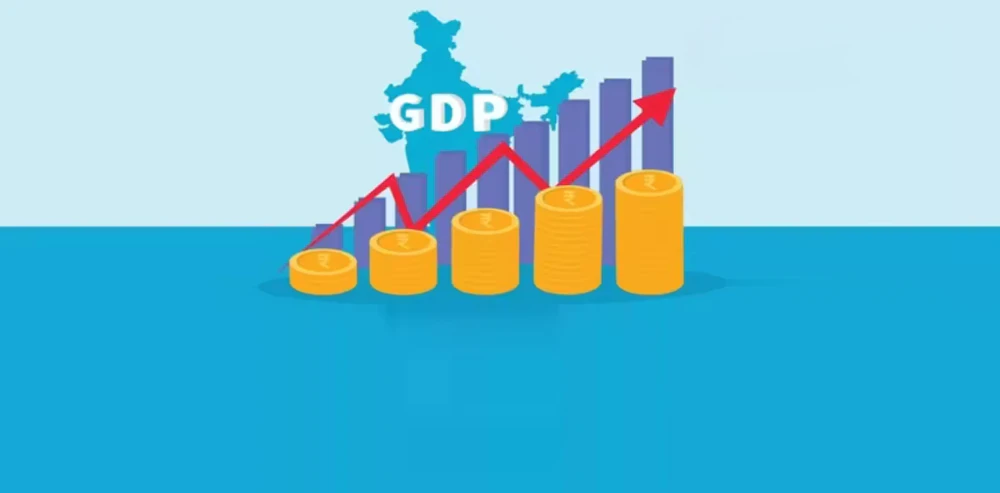
"Governments always talk about numbers whenever they are unsure of what to say or do about their economics; juggling with numbers is always a tactic to reach out to the people"
Given the fierce political debate and ongoing critical uproar surrounding India’s latest GDP data, one cannot help but wonder if this timeless wisdom has found its ultimate echo in the unfolding national narrative. With policymakers celebrating a headline-grabbing 7.8% real GDP growth rate and critics countering that a convenient baseline revision artificially manufactured the jump, the entire spectacle validates the idea that statistics are often deployed less to measure the economy and more to manage public perception.
Whether these soaring economic metrics are genuinely robust or meticulously adjusted has become a secondary debate. To the average citizen currently trying to budget for daily groceries, these mathematical gymnastics mean absolutely nothing. The situation breathes life into the timeless phrase: "There are lies, damned lies, and statistics." Or, perhaps more accurately, statistics can be deeply selective, what they reveal is undeniably suggestive, but what they conceal remains essential.
This practice of statistical adjustments is hardly a modern innovation deployed exclusively by the contemporary ruling class. To truly understand today’s economic briefings, one can look back to history's ultimate exercise in macroeconomic projection: the late 17th-century propaganda of King Louis XIV of France.
When his kingdom faced severe financial distress, he did not rely solely on sound fiscal policies or structural tax reforms. Instead, he built the Hall of Mirrors at the Palace of Versailles. The room was engineered to reflect so much blinding opulence that visiting dignitaries and desperate citizens alike were distracted from the hollow treasury and the starving population. While the nation struggled with its debts, the monarchy proved that when structural challenges arise, magnificent projection can temporarily obscure a fragile reality.
Fast forward to the present day, and critics argue that the government’s latest, glowing GDP reports echo that exact same Versailles spirit. A fierce economic debate has erupted across the political spectrum. Analysts and opposition leaders are questioning the specific methodologies adopted to trigger the latest upward revision, while pointing out a massive statistical discrepancy in the estimated size of the economy.
While the government and its supporters laud the figures as a showcase of exemplary growth, critics continue to question how exactly this magnificent number was achieved. To those looking closely, the statistical framework appears remarkably complex, relying heavily on creative mathematical modeling rather than tangible, street-level realities.
These skeptics are demanding transparent answers, issuing a stern warning that continuing with a defensive, ostrich-like stance risks doing more than just dampening domestic sentiment. It risks eroding the international credibility of the nation's economic growth figures and future projections, transforming what was meant to be a showcase of global financial dominance into a subject of global skepticism.
From the government's perspective, this optimistic economic messaging is considered a political necessity, especially at a time when leadership approval faces domestic challenges, including recent youth-led protests.
But out in the real world, away from the air-conditioned war rooms of statistical architects, the common citizen is forced to watch this high-stakes juggling act with profound exhaustion, left to ponder a simple riddle: Is this real economic growth, or just elite statistical gymnastics?
Ultimately, the answer changes absolutely nothing for the average household. It does not lower the skyrocketing price of basic commodities, nor does it cushion the blow of ironically timed calls for public austerity. Delivered with profound solemnity even during high-profile foreign visits, official decrees to "tighten our belts", compounded by regressive public rationalizations suggesting that a spike in sugar prices is simply an effective measure to curb diabetes, fail to validate the glossy, hyper-exponential hyperbole surrounding GDP growth.
Whether the GDP is rising at a record rate or the spreadsheets are simply being presented under spectacular lighting, the rhetoric belongs exclusively to the policymakers, while the economic hardship belongs to a vulnerable public.
This stark disconnect between the state’s glittering declarations and the street's quiet desperation brings to mind an iconic, timeless line from Bollywood's socio-political masterpiece, Pyaasa:"Jinhe naaz hai Hind par, woh kahaan hain?"(Where are they who boast of being proud of India?).
Ultimately, as the numbers dance and the headlines rejoice, the common citizen remains in the audience, watching a grand show of economic triumph from an increasingly empty stomach. Marooned between the dazzling choreography of state spreadsheets and the quiet desperation of daily survival, the ordinary household is left to wonder whether this soaring, abstract GDP will ever translate into the tangible reality of their daily bread.













Comments (…)
Leave a Comment