Krishna, Godavari Water In T'gana Unsafe?
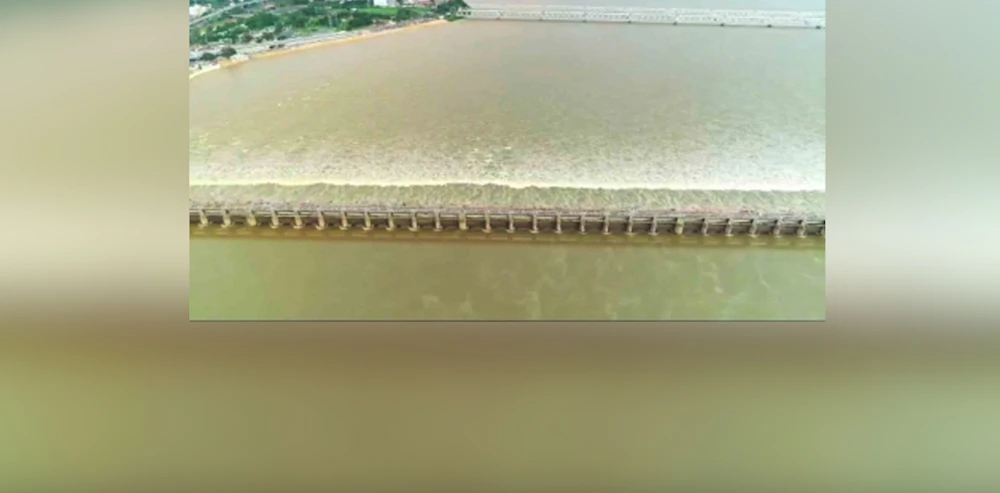
Recent data from the Central Water Commission (CWC) has uncovered concerning levels of bacterial contamination in Telangana's major rivers, Krishna and Godavari. The report indicates that total coliform (TC) levels in the Krishna river have exceeded permissible limits by nearly 20 times, with readings as high as 9,200 most probable number (MPN) per 100 ml in Nalgonda and Suryapet districts. Similarly, parts of the Krishna basin in Khammam district, particularly Wyra and Madhira, have recorded TC concentrations at 16,000 MPN per 100 ml, surpassing the permissible standard by 32 times. Additionally, faecal coliform bacteria levels have been found to be five times higher than prescribed norms at various monitoring locations.
This alarming revelation places the contamination levels in the Krishna and Godavari rivers in proximity to those reported in some of the country's most polluted river stretches, including the Ganga, Yamuna, and Cauvery. Recent studies conducted by the National Environmental Engineering Research Institute (NEERI) and IIT Hyderabad have highlighted serious concerns in the Godavari basin, attributing untreated wastewater discharge and environmental risks posed by nearby municipal landfills as contributing factors. Furthermore, a report by the National Institute of Technology (NIT), Warangal, has identified industrial pollution as a major contributor to contamination in the Krishna, pointing to multiple industrial clusters across Telangana as sources of pollution.
Water experts have attributed the deteriorating situation to rapid urbanization and the inadequate sewage treatment infrastructure, emphasizing the need for improved wastewater management. B Venkateswara Rao, a retired professor from the Centre for Water Resources at JNTUH, has cautioned that the geological characteristics of Telangana could exacerbate the problem, as coliform bacteria struggle to settle into the groundwater system due to the region's hard-rock terrain. Instead, they remain suspended in the river flow for longer distances before settling downstream. The findings underscore the urgent need for comprehensive measures to address the contamination of these vital water bodies and safeguard public health and the environment.