The American Dream Just Got Harder

For decades, the United States has marketed itself as the land of opportunity, attracting the world's brightest students, skilled professionals, entrepreneurs, and dreamers. However, under President Donald Trump's second term, the immigration landscape is rapidly evolving, creating fresh uncertainty for those hoping to study, work, or settle in America legally.
The administration's renewed focus on immigration is no longer limited to illegal border crossings. The spotlight has now shifted to legal immigration channels as well, with stricter scrutiny, enhanced background checks, and tougher compliance requirements becoming the new normal. While the White House argues that these measures are necessary to protect national security and American jobs, critics believe they risk discouraging global talent from choosing the United States.
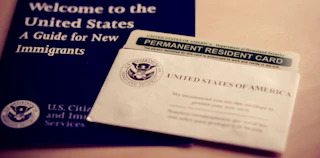
A recent policy memo issued by the US Citizenship and Immigration Services (USCIS) on May 22 has intensified these concerns. The proposal could require many temporary visa holders seeking permanent residency to complete the final stages of their green card process outside the United States through consular processing. For thousands of H-1B professionals, L-1 executives, international students, and their dependent family members, this could mean additional travel, longer waiting periods, higher costs, and greater uncertainty about their future.
The timing is particularly significant for the Indian diaspora, which constitutes one of the largest groups of skilled immigrants in the United States. Indian technology professionals, healthcare workers, researchers, and students have traditionally relied on a predictable pathway from temporary visas to permanent residency. Any disruption to that pathway could affect not only individual careers but also long-term family plans and financial stability.
Beyond green cards, the administration is also expanding visa vetting procedures. H-1B applications are expected to face increased scrutiny, while international students applying for F, J, and M visas may encounter more detailed reviews of their backgrounds, academic plans, and online activities. Universities and research institutions fear that prolonged visa processing times could reduce international enrollment and weaken America's competitive advantage in higher education and innovation.
Business leaders are equally concerned. Many sectors of the U.S. economy continue to face talent shortages, particularly in technology, engineering, healthcare, and advanced manufacturing. Industry groups argue that making legal immigration more difficult could ultimately hurt economic growth by pushing skilled workers toward competing destinations such as Canada, Australia, the United Kingdom, and parts of Europe.
Supporters of the administration's approach maintain that stronger enforcement is necessary to ensure that immigration laws are followed and that pathways to residency are not misused. They argue that tighter screening improves accountability and reinforces public confidence in the immigration system.
Yet for many aspiring immigrants, the message is becoming increasingly clear: legal immigration to America is no longer simply about meeting eligibility requirements. It now demands greater patience, deeper financial commitment, and a willingness to navigate a system that is becoming more complex and unpredictable.
As America recalibrates its immigration priorities, the coming years may determine whether the country continues to attract the world's best talent—or whether those ambitions increasingly find a home elsewhere.










Comments (…)
Leave a Comment