The Disobedient Force The Authoritative To Obey
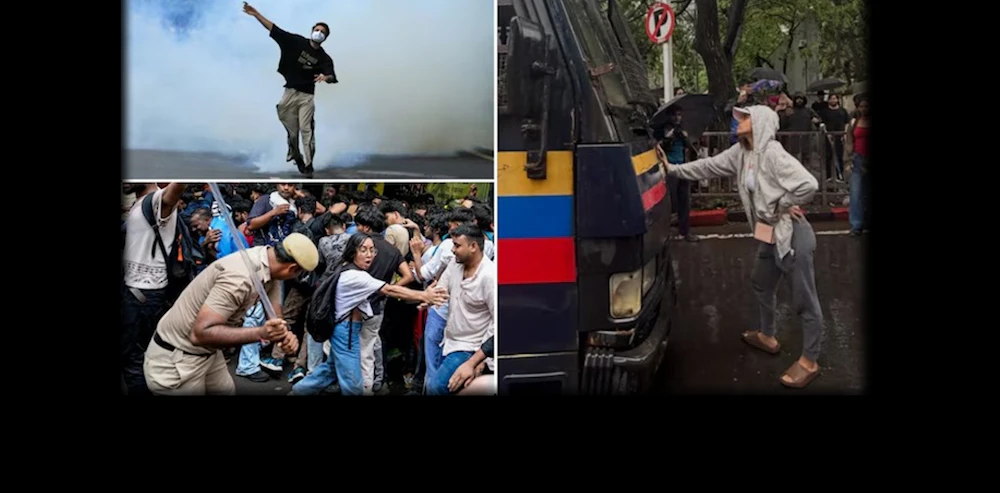
"If a parliament in a democracy ignores dissenting views and treats them as anti-national, it loses trust, forcing its citizens to use the streets rather than legal institutions to vent their anger”
"పదండి ముందుకు, పదండి తోసుకు, ప్రభంజనంవలె హోరెత్తండి" ("March forward, push ahead, and roar like a raging storm!"). Invoking this revolutionary spirit of the poet Sri Sri, India's Gen-Z orchestrated a massive civil disobedience campaign that marked a sudden political awakening. Moving away from their previous support of the ruling party’s polarizing narratives, these youth utilized tech-savvy satire to challenge the administration directly. Their mobilization directly confronted an establishment that has long dismissed institutional failure, criminalized dissent, and suppressed democratic liberties.
The movement highlighted deep public anxiety over the centralization of power in a single party and leader. It exposed a profound breakdown in constitutional checks and balances, sending a stern message: when traditional state institutions stop listening and fail to respond, citizens are forced to bypass conventional avenues and find alternative channels to make democracy speak. In effect, it left the top leadership looking like a deer caught in the headlights, rapidly running out of viable political options.
Initially dismissive of the online campaign, the government faced a humbling setback that forced a historic policy reversal. Education Minister Dharmendra Pradhan’s swift resignation was a calculated administrative move to contain student unrest before opposition parties could leverage it further. This unprecedented concession shattered the administration's 12-year illusion of absolute invulnerability and forced a return to public accountability.
The critical question, therefore, is why the government allowed the situation to deteriorate to such an extreme impasse. Does this reflect a calculated administrative maneuver, or institutional indecision compounded by political complacency?
It would be inaccurate to suggest the government was caught off guard by these developments. From the earliest stages of the youth's online mobilization, the state utilized its established rhetorical strategies, seeking to neutralize the Cockroach Janta Party (CJP) by characterizing the movement as unpatriotic and subversive. Given its experience with much larger and more formidable mass movements in recent years, it is highly implausible that the administration failed to foresee the escalation of what began as an overlooked, peaceful demonstration.
Was the administration's delay a calculated maneuver to distract from the Ayodhya temple fund embezzlement scandal currently anchoring the opposition's political attacks? The issue is hyper-sensitive because it strikes at the heart of the party's core ideological image as the ultimate champion of Hindutva. As things unfolded, the student protests undoubtedly helped to temporarily divert public attention away from this "donation theft" narrative.
Had that scandal gained widespread traction earlier, it would have severely punctured the ruling party's moral authority.
Politically, the fallout from those financial allegations would have been far more damaging. The temple is not just a place of worship; it is the definitive symbol of the ruling party's identity and decades-long political struggle. For years, the party portrayed the temple movement as a sacred, selfless mission for Ram Rajya, Hindu pride, and cultural justice, elevating its image far above ordinary, corrupt politics. Because the top leadership directly handpicked the trust members, allegations of organized theft from ordinary devotees shatter the narrative of "clean governance" and expose the party to charges of exploiting religious faith for financial and political greed.
Attempting to mitigate the Ayodhya controversy by normalizing institutional embezzlement as a systemic issue across religious bodies represents a fundamentally flawed defensive posture. Such an approach severely underestimates the degree to which this specific crisis undermines the foundational ideological credibility of the ruling party.
Did this diversionary tactic successfully neutralize the fallout from the temple crisis, or did it merely delay the inevitable damage? Did the sacrifice of the education minister actually end the administration's troubles, or did it just provide a temporary shield against a far more damaging controversy?
While the conclusion of the student demonstrations strips the opposition of an immediate political weapon on the streets, parliamentary reports suggest they are already shifting strategies.
Opposition strategists plan to place the explosive temple donation controversy at the top of their legislative agenda to corner the government on the treasury benches.
For now, the youth might appear to have retreated. However, the profound faultlines between the central leadership and the younger demographic have been exposed beyond repair. The genie is out of the bottle, and the culture of silence has shattered; the youth have openly broadcasted the systemic failures that older generations only dared to whisper behind closed doors. A volatile mix of broader grievances, including rampant inflation, acute unemployment, and widespread generational hopelessness, now stands exposed, waiting to be mobilized against the perceived arrogance of an authoritarian regime.
“Don’t make a Hero,” warned the CJP leader following the minister's resignation, cautioning that elevating any single individual above the constitution or its institutions ultimately ruins a nation. It was a pointed jibe inferring that the country has suffered precisely because citizens allowed a single leader's persona to eclipse state institutions. It serves as a definitive wake-up call: the nation increasingly sees through the illusion of absolute invulnerability, and the public will no longer tolerate institutional manipulation.
This clarion call from the youth leadership carries an ominous warning for the regime: this is just the beginning. As the popular phrase goes, "Picture abhi baaki hai", the real showdown is yet to come.










Comments (…)
Leave a Comment