Vande Mataram: A unifying cry or a political weapon?
“The most effective way to destroy people or polarize their society is to erase their memory; to deny and obscure their history, traditions, and collective identity”
The above is a powerful statement that contends that stripping people and their society of their historical grievances or triumphs makes it harder for them to unite against present injustices, as they lose the shared context and inspiration for resistance.
In other words, denying a people their history allows the dominant narrative to replace it, creating a new "truth" that justifies the power dynamic and ensures obedience of the people to those controlling the distorted narrative.
Throughout history, leaders and rivals have frequently attempted to deny the people of their history by invoking past mistakes or blunders to undermine their opponents and consolidate power.
In 1867, Tsar Alexander II of the Russian Empire sanctioned the sale of the Alaska territory to the United States for $7.2 million, as the region was perceived to be an unproductive, frozen wasteland. Decades later, the subsequent discovery of significant gold and vast oil reserves illuminated the immense financial magnitude of this decision as a significant blunder.
This act of "squandered" wealth became a lasting historical anecdote, with political rivals in later Russian history conceptually using this poor judgment as a potent criticism against previous regimes' competence.
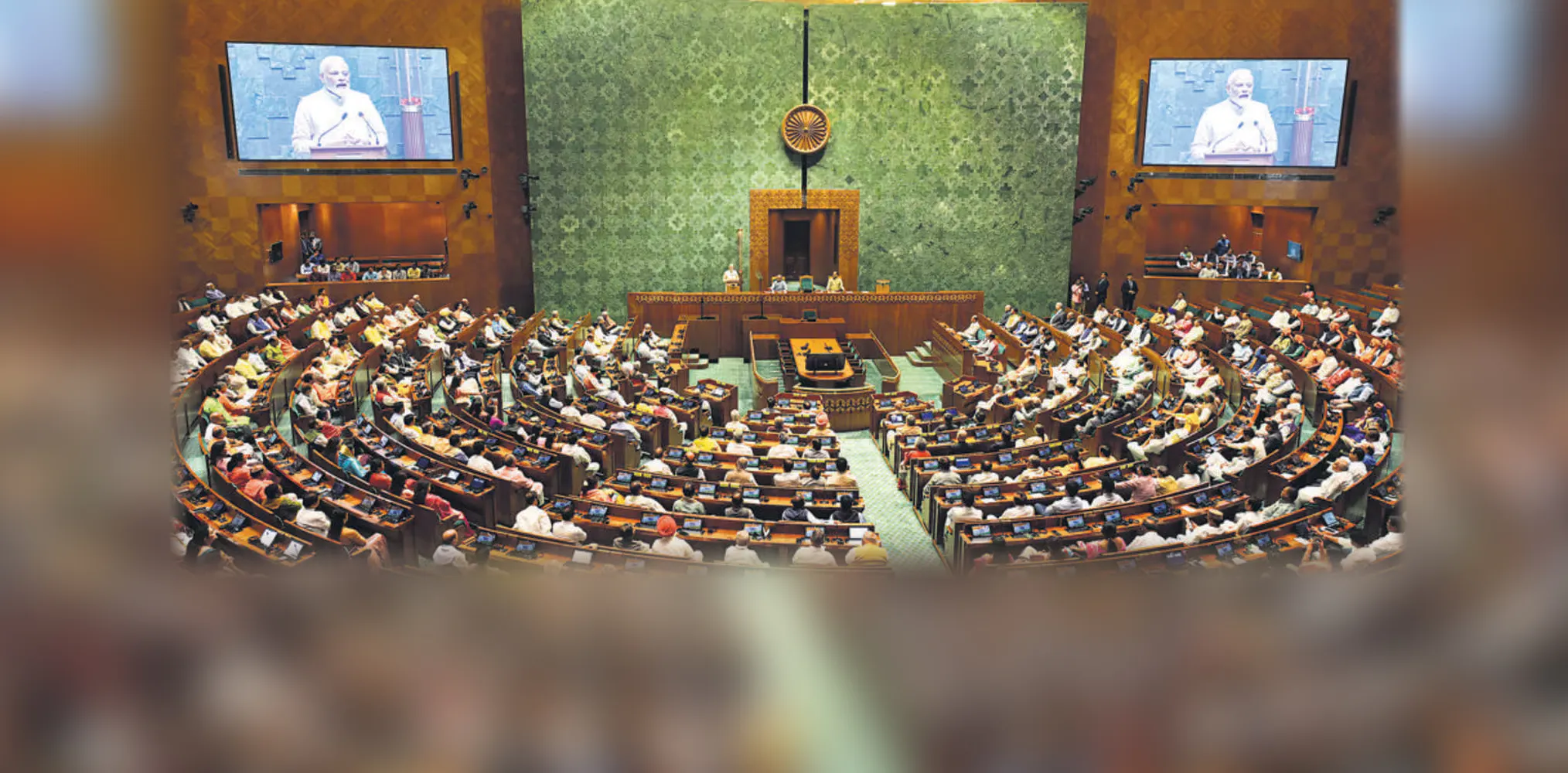
This dynamic—where a past strategic decision is leveraged by rivals as proof of incompetence or poor character to shift public opinion and consolidate electoral interests—is currently in full glare during a 12-hour-long special discussion to commemorate 150 years of the national song Vande Mataram, with the treasury benches and the opposition trading charges on historical accounts surrounding the song's significance.
Whether it’s appropriate to use Parliament’s time deliberating the significance of the song in India’s freedom struggle is another point of discussion.
But it becomes problematic when such discussions displace critical focus on immediate issues like IndiGo's ongoing flight disruptions, rising air pollution in major Indian cities, and the falling rupee, especially when these discussions are exploited to score political points instead of addressing tangible problems.
The debate has quickly devolved into a political and ideological clash rather than a unifying discussion.
The ruling party has used it to critique past decisions by the Congress party regarding the song's stanzas, while the opposition has accused the government of trying to polarize the public and distract from current governance issues like unemployment, inequality, and electoral reforms.
The juxtaposition of celebrating "Vande Mataram" as a unifying historical slogan while simultaneously blaming past leaders for compromising on it for political gain by the leadership of the treasury benches is widely considered a form of hypocrisy designed to further political polarization. The discussion was selectively used history to achieve contemporary political goals.
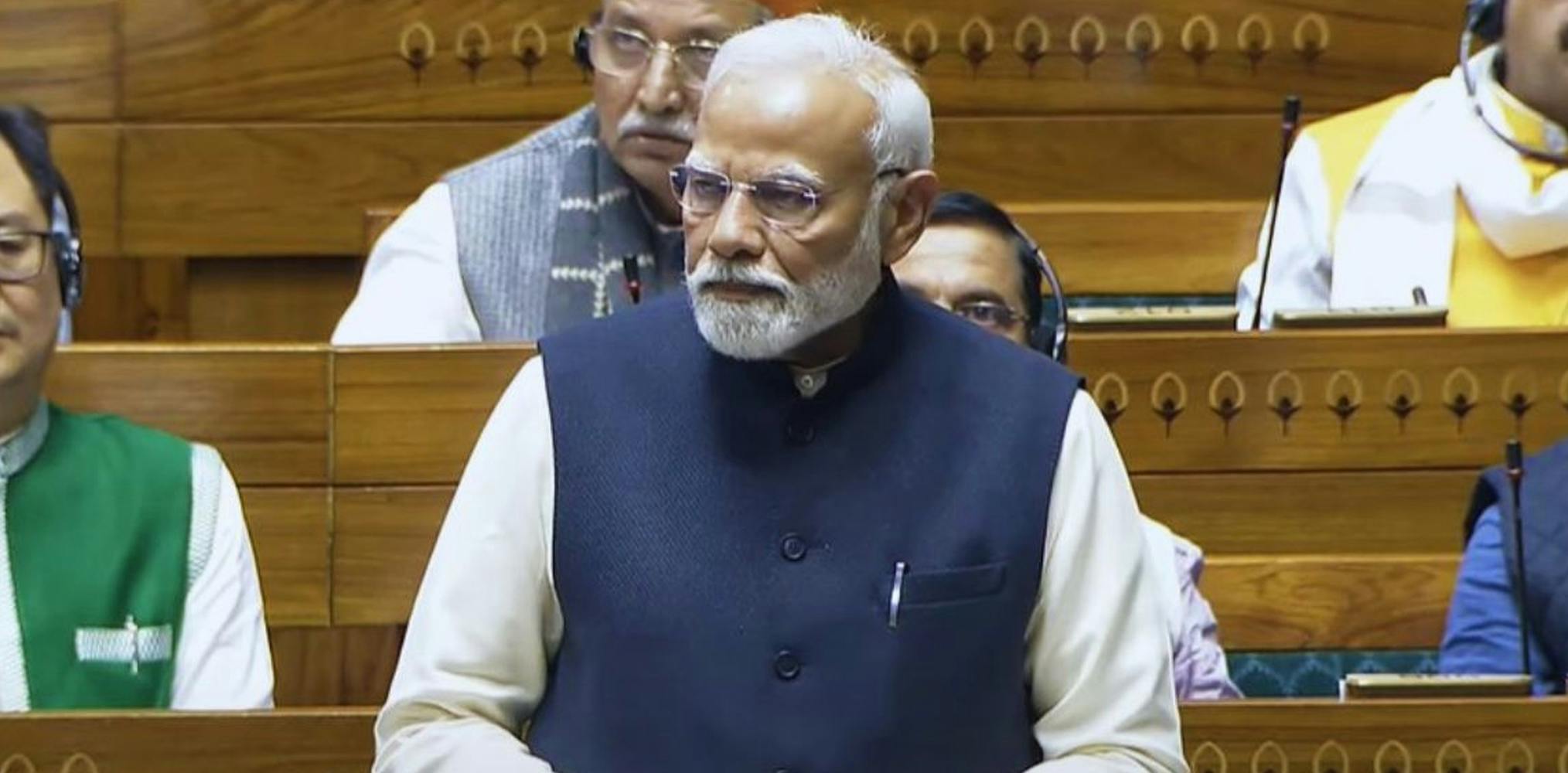
Instead of narrating the siginifcance of the song's role during the freedom struggle, emphasizing its power to unite diverse freedom fighters against the British, the BJP’s Supreme Leader shifted his focus to attack past political rivals (specifically the Congress and Nehru) for their pragmatic decision to shorten the song in 1937.
In his exuberance to attack the Congress, he wittingly distorted the facts that the decision was made after consultation with leaders like Rabindranath Tagore and Mahatma Gandhi, who acknowledged that later stanzas with explicit Hindu imagery might alienate Muslim communities, thus potentially hindering the broader independence movement's unity.
By portraying the 1937 decision as a "surrender" or a "tukde-tukde" (fragmentation), the BJP’s leadership attempted to create a false dichotomy between "pure" patriotism (demanding the full song) and "appeasement" (accepting the shorter version) deliberately ignoring the inclusive spirit that motivated the original compromise to reframe a complex historical decision as an act of betrayal.
This deliberate use of parliamentary discussion for political purpose is an attempt to morph the song from a symbol of national pride into a "whip of Hindutva nationalism," a perceived litmus test of an individual's patriotism used primarily against minorities.
The discussion, in fact, exposed the core hypocrisy of the BJP’s leadership in promoting a symbol of historical unity via methods that are explicitly divisive in the present growing communal divide across the nation.
The 1937 decision by the then Congress leadership was a practical act of nation-building aimed at achieving an inclusive, pluralistic front for independence.
The current effort of invocation of the "truncated" song by the Ruling Party, whose founding fathers never historically associated with the Indian Independence Movement, serves a different purpose of stoking cultural grievances, consolidating a specific majoritarian identity, and settling old political scores.
By continuously re-litigating a settled historical compromise, the debate shifted focus from current national challenges and kept communal lines hardened, ultimately serving political polarization rather than genuine national unity.
Thus, the 12-hour long discussion is a political tool nor an honest attempt to reconcile historical complexities but a strategic use of emotion to create division.
In a nutshell, it’s no denying the discussion on Vande Mataram has national importance.
However, the appropriateness of the debate had become questionable as it genuinely failed to unite the nation through shared history and deliberately attempted to morph the historical significance of song as a tool for political point-scoring.
At the most it served the Ruling party, whose ancestors never participated in the freedom struggle, to quote the very history which they tried to refer during the debate, to deflect the nation’s attention from immediate, pressing governance issues to divert its very failures.