CBN Faces ‘Credit Grab’ Charge
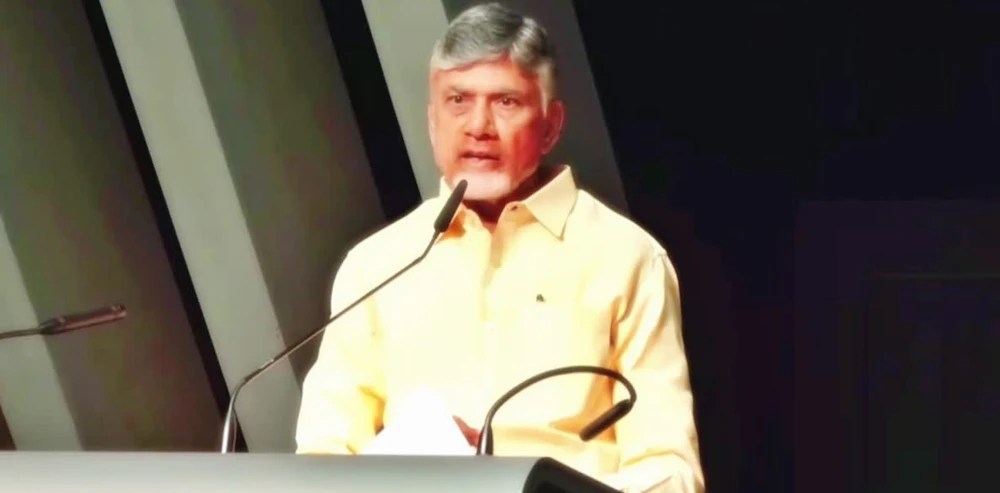
The YSR Congress Party (YSRCP) has accused Andhra Pradesh Chief Minister N. Chandrababu Naidu of attempting to claim credit for the Poola Subbaiah Veligonda Project, arguing that most of the key work was carried out during the tenures of former chief ministers YS Rajasekhara Reddy and YS Jagan Mohan Reddy. Addressing the media in Tadepalli, former MLA TJR Sudhakar Babu said the project was conceived to provide irrigation to 4.47 lakh acres and drinking water to 15.25 lakh people across 30 mandals in Prakasam, Nellore and YSR Kadapa districts. He alleged that although Naidu laid the foundation stone in 1996, the project made little progress until 2004, while YSR later revived it under Jalayagnam, introduced the second tunnel and advanced several major components. According to Sudhakar Babu, more than 20 km of tunnelling was completed between 2004 and 2014, while the pace of work increased significantly under Jagan, who oversaw the completion of the twin tunnels and dedicated them in March 2024. He questioned the need for another inauguration and demanded compensation for displaced families affected by the project.
The party also launched a broader attack on the coalition government, alleging that development and welfare schemes have suffered while borrowing, expenditure and publicity costs have increased. YSRCP spokesperson Karumuri Venkata Reddy claimed that the state had accumulated around Rs 3.86 lakh crore in debt during the coalition government's 26-month tenure, including borrowings through the Budget, corporations and Amaravati-related funding. He contrasted this with the previous YSRCP government's welfare spending, claiming that large amounts were directly transferred to beneficiaries and that initiatives such as Nadu-Nedu, medical colleges, ports, fishing harbours and village secretariats were taken forward. Reddy further alleged that the present government was spending heavily on publicity, official residences, vehicles, aircraft, advertisements, consultants and ceremonial events while claiming a shortage of funds for welfare commitments. The YSRCP argued that the spending pattern reflected a growing gap between the government's financial priorities and the needs of ordinary people.















Comments (…)
Leave a Comment