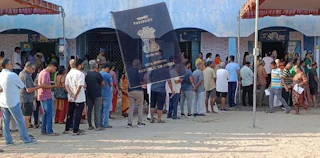
WB- Record Turnout: Missing The Larger Picture?

“Knowledge is knowing tomato is a fruit, wisdom is not adding it in a fruit salad”
While funny, this simple line of Miles Kingston, a British Journalist, highlights a critical truth: knowing facts is one thing, but knowing how to use them is what actually matters.
It suggests that true wisdom is the ability to apply information correctly in different situations, mirroring the philosophy of Pythagoras, who believed numbers weren't just for counting but were tools to understand the hidden order of the world.
Today, we see this gap when pollsters fail to look beyond raw data. For example, when pollsters tried to predict election results in West Bengal based only on voter turnout numbers, they may have missed the "wisdom" of the bigger picture, proving that without context, even the best data can lead to a very strange "fruit salad".
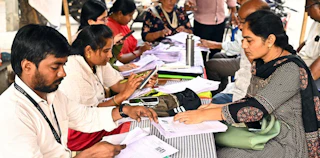
The 2026 West Bengal Assembly polls saw a massive 90% turnout, but seasoned observers are questioning the Election Commission’s "historic" label. Pundits argue the surge is a mathematical illusion caused by a "purged" voter list; with so many names axed during the Special Intensive Revision, the percentage naturally climbed without a real spike in raw numbers.
While most pollsters are calling this a "wave election" signalling Paribartan (change), in contrast to the past experiences that mirrored the principle that high participation doesn't always equal anti-incumbency, and it also points to a question whether those predicting a “Wave Election” had taken into account whether there is any clear shift in voter sentiment. If not the "surge" may just be business as usual rather than a mandate for a new government.
In other words, observers argue that without analysing whether there is clear evidence of a shift in voter sentiment, the high turnout percentage may not represent an anti-incumbency "wave" but rather a statistical anomaly based on a smaller, revised voter denominator.
Critics of the "Special Intensive Revision", or what detractors are calling "System Initiated Rigging", argue that pollsters are missing the real story. It remains unclear if voters were driven by standard anti-incumbency or a deeper, accumulated anger over being denied their basic democratic rights.
No doubt, anti-incumbency against Mamata Banerjee’s 15-year administration is palpable across West Bengal. On the ground, voters frequently cited concerns over a lack of jobs, persistent political violence, corruption and claims of minority appeasement.
At the same time, the BJP has pulled out all the stops, with critics describing their aggressive tactics as putting the "election under siege." A major flashpoint is the mass removal of voters from the rolls under the label of "logical discrepancies," a move many claim specifically targeted those unlikely to vote for the BJP.
The state remains the "final frontier" for the BJP, a state that has historically been an ideological stronghold against them. After decades on the sidelines, the party sees the current anti-incumbency as their best shot to finally break through.
A victory here wouldn't just be a win; it would be a major ideological trophy, completing their dominance across the country from west to east.
To secure this, critics claim the party has aggressively influenced every stage of the process, from purging voter lists and reshuffling officials to controlling security deployments. Between inflammatory speeches and controversial government cash transfers, the Election Commission also faced heat for allegedly clearing the path for a BJP victory.
Thanks to SIR, which unfairly excluded the non-BJP voters, the Hindutva party heads into the West Bengal polls with an unfair but significant advantage provided by the Election Commission.
The question now calls for the “Tomato” wisdom. The above narrative explains the information that is available that could give a simple explanation to predict that the higher percentage, the SIR factor including the anti-incumbency, is for the advantage of the BJP.
What if the fears of losing citizenship rights significantly impacted the BJP's and whether this panic translated into a consolidated vote for the Trinamool Congress (TMC) as a "protective" shield.
It’s not known whether the voting pattern is influenced by the ‘identity and dignity” rather than the legality of the voters.
Has the polarization helped the BJP in specific pockets or the overwhelming fear of losing citizenship led to a higher turnout among groups that felt targeted, effectively neutralizing the BJP's gains.
Whether SIR, what was intended to be a defining nationalist masterstroke became a potent mobilization tool for the opposition, as the existential threat of losing one's legal status proved more motivating than the BJP's promises of refugee naturalization.
In a nutshell, the exit predictions echo the “Tomato” wisdom, where they fail to explain whether the high turnout has reflected a struggle for identity and political survival rather than a straightforward mandate for change, potentially neutralizing BJP gains.
Fingers crossed.