AP's New Formula: More Children, Less Wealth
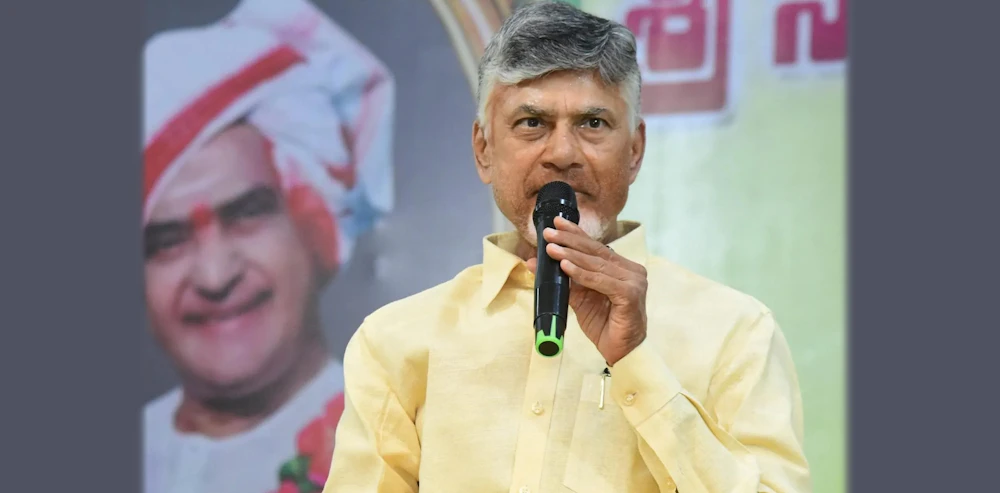
"A government that cannot sustain its living population cannot justify outsourcing its economic failures to the maternity ward”
This quote exposes the ultimate irony behind Andhra Pradesh’s new population math. Its leadership claims this policy is a visionary attempt to save the economy from an ageing society, a clever ruse to hide its failures of “Sampada Sristi” rhetoric.
The state of Andhra Pradesh might be running low on several fronts like jobs, infrastructure, and free education, but don’t worry, it will soon have a massive surplus of two things: politicians and voters.
While the upcoming delimitation process promises to magically multiply its political class, the visionary leader of Andhra Pradesh has a brilliant plan to match them: pay people to have more babies, or rather, voters.
It is going to be a truly lively system. While the grand "Make in India" factories and the famed “Sampada Sristi” platforms stand completely empty, the maternity wards will be all braced up to pick up the slack. Soon, they will mass-produce an endless supply of brand-new voters, perfectly engineered to stand and clap for the ever-growing army of future lawmakers.
The leader of Andhra Pradesh has cracked the ultimate economic code: forget about creating actual wealth, and just focus on filling the delivery rooms with future taxpayers. After all, why bother fixing real problems when you can just breed a new population? In a stroke of pure genius, the government realized that since it cannot provide jobs, decent schools, or smooth roads for the people alive today, the easiest solution is simply to make more people.
Under this groundbreaking "Vision," he has commodified the cradle. The pricing tier is clear, with a cool ₹30,000 bonus for the third child and an upgraded ₹40,000 package for the fourth. Think of it as a supermarket loyalty program, but for the polling booth. People might not have the money to actually feed thier children, but they would have a brighter side, in which, they get a cash-back reward for manufacturing new voters.
Critics, who clearly lack "vision", are terrified by the grim reality of mass unemployment. They even panicked over the Chief Justice of India's recent remarks about the jobless, completely ignoring his clarification that the media totally misquoted him. Instead of trusting the plan, these critics ask silly, shortsighted questions like, "Where will these children work?" or "What will they eat?" Will the visionary leader’s government take the onus for their well-being?
His detractors are missing the grand strategy. The state isn't failing to create jobs; it is redefining what a "job" is. In this new economic code, being a citizen is employment, whereas, his primary professional responsibility is very simple: “grow up, stand in a long queue, and vote for more lawmakers.”
With the upcoming delimitation process, the state will soon need an army of new politicians to fill increased seats in legislative houses. And what good are lawmakers without a massive, struggling crowd of voters to govern? It is a lively, symbiotic ecosystem. The government provides the cash bonus; the people provide the numbers.
It takes a truly special kind of visionary leadership to look at a state completely lacking basic infrastructure, jobs, and free education, and say, "You know what this place needs? More children!" Never mind that they will just join the massive army of the unemployed, or end up labelled as the "cockroaches and parasites" of society.
By encouraging families to expand before fixing the foundational failures that plague the existing population, the leadership is effectively treating demographic growth as a substitute for economic development. It shifts the burden of the state's economic stagnation onto the maternity ward, creating a troubling paradox where the production of new voters takes precedence over the survival and success of living citizens.
Who needs a functioning economy when you have an abundant supply of future voters?