The Tale Of Two Austerity Calls

"A hungry people can be fed on grand spectacles for only so long before the hunger for bread outweighs the thirst for glory"
The above profound quote suggests that the "spectacle" of a Vishwa Guru' status cannot hide policy failures forever. You cannot ask a citizen to "sacrifice" their worldly comforts to fund a "global hug" that isn't even winning the nation a seat at the peace table.
Social media is on fire after the "Supreme Leader" issued a heartfelt nonchalant plea for national austerity, urging citizens to stop buying gold and reduce fuel consumption.
Critics were quick to point out the glaring contrast between his call for sacrifice and his own penchant for thousand-crore roadshows and high-fashion foreign tours.
However, no sooner had the ink dried on these critiques than the ruling party’s IT cell warriors dug the "Newspaper archives" and triumphantly resurrected a 1966 news item from The Hindu featuring Indira Gandhi making a similar appeal to avoid gold.
The message was clear: "If she did it then, why can't we do it now?"
But as anyone with a basic sense of irony, will tell you, the devil is in the backdrop.
In 1966, Indira Gandhi wasn't standing on a stage claiming India was a global economic juggernaut.
Rather, she was presiding over a nation where the treasury was genuinely gasping for air, dealing with the aftermath of war, severe droughts, and a food crisis so extreme it was called "ship-to-mouth."
When she asked people to save gold, she was asking for a survival kit for a struggling nation.
She didn’t have a 4K drone team following her every move; she had a list of national crises so heavy that they wouldn't have fit into a broadcast, even if she had the luxury of airtime for her own "Mann ki Baat."
Fast forward to today, and the "Gold vs. Glitz" strategy has undergone a glamorous makeover.
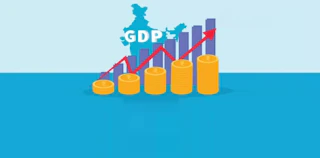
We are told, in no uncertain terms, that we are an "Economic Superpower." We are "Vibrant," we are "Rising," and we are "Amrit Kaal-ing" our way to glory.
Yet, in the middle of this victory lap, the public is told to tighten its belt, not because the country is broke, but apparently to hide policy failures and serve as a subtle message to brace for a massive fuel price hike coming soon.
The paradox is most visible on the highways and in the skies. While citizens are lectured on "judicious fuel use" and encouraged to take the metro to "save the nation," the supreme leader's own travel remains a masterclass in carbon-heavy razzmatazz spectacle.
His roadshows feature massive convoys of armored cars and elaborate trips that cost the exchequer crores.
The "Supreme Leader" asks for your sacrifice from the steps of a private jet, shimmering in a different designer outfit for every time zone.
This isn’t just a diplomatic tour rather an expensive performance.
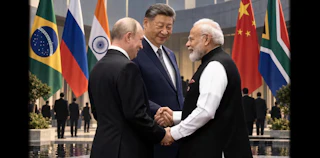
He flies across the globe to hug world leaders in what has become an extravagant display of "Huglopamcy" rather than strategic Diplomacy.
Despite the high-definition optics, the global reality is sobering: while India is sidelined from the crucial Pakistan-mediated West Asia ceasefire negotiations, it faces the sting of President Trump’s "Liberation Day" tariffs and public ridicule over its trade and energy policies.
It seems in the "New India," the public is expected to skip gold and brace for fuel hikes just to fund a diplomatic show that is increasingly losing its seat at the world's most important tables.
The IT cell’s use of the 1966 archive is perhaps the greatest joke of all and a Hypocritical display to hide their Leader's policy failures.
In 1966, austerity was a necessity born of hardship; today, it is a convenient distraction.
In the old days, if a PM told you the economy was in trouble, they at least looked like they were in the same storm.
Today, the message is: "You stay home, skip the gold, and pay more for petrol to manage our failures; I’ll handle the 4K roadshows and the global hugs."
In "New India," your national sacrifice isn't about the economy, it's the ticket price for a show that isn't even winning awards anymore.