How India's "Burnol Moment" Became A "Kaalia" Conundrum?
“Idi Mallela velayani, idi vennela maasamani, thondarapadi oka koyila munde koosindi, vindulu chesindi” (“ Mistaking the hour for springtime, an eager cuckoo sang too soon, to be caught in her own sweet predicament”)
In a classic Telugu song, this verse poetically warns of an over-eager songbird that mistakes a brief warmth for the permanent arrival of springtime. Believing the season of celebration has arrived early, she sings too soon, only to find herself trapped by the adverse consequences of her premature joy.
When applied to the current, cutthroat stage of international relations, the songbird’s blunder perfectly mirrors India's current diplomatic bind. Following Donald Trump’s strategic pivot to China, New Delhi faces a harsh reality check that shatters its illusions and forces a total strategic reset. Overconfidence, it seems, usually leads to a painful strategic geopolitical reality check.
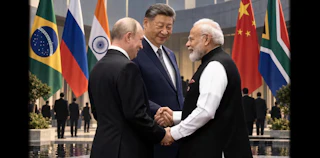
Nine months ago, the ruling party's IT cell was awash with triumphalism. Following Trump’s aggressive 50% tariff hike on Indian exports, India's Supreme leader rushed to China to embrace Xi Jinping to secure a diplomatic counterweight, conveniently set aside the bitter memory of China's aggression in the Galwan Valley.
This move was quickly weaponised by online warriors who celebrated it as a definitive "Burnol moment" for a short-sighted White House.
Social media went into overdrive, taunting Trump with the sarcastic refrain, "Tujhe mirchi lagi toh main kya karoon?" (If you are getting offended and jealous, what can I do?). The narrative was simple, punchy, and defiantly overconfident: if Washington refused to play fair, New Delhi would take its business to the biggest market next door.
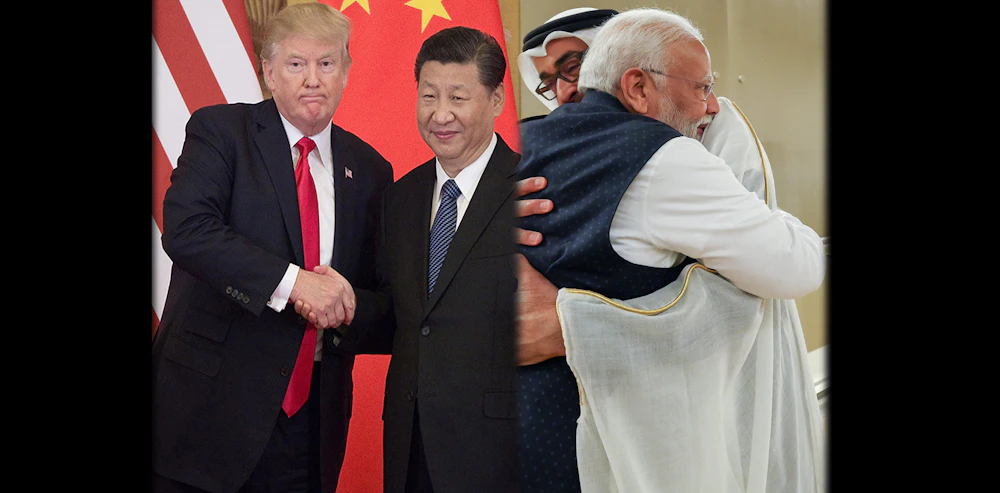
Cut to May 2026, and that online triumphalism has transformed into the songbird’s bitter predicament. In a rapid, cold-blooded recalibration of global ties, Donald Trump, true to his transactional character, landed in Beijing for a high-profile summit with Xi Jinping to stitch together a "constructive strategic deal" to wind down their strategic rivalry and trade war signalling a profound and permanent architectural shift, both in their strategic relations and the broader global order.
Although no official deal was announced, the meeting sent a clear message: Washington and Beijing are learning to share global influence based on their economic strengths, rather than fighting a destructive war for total global control. It is a classic case of both superpowers willingly embracing geographic realism over ideological commitment.
This clever strategy became obvious when Trump toned down his usual aggressive talk about defending Taiwan, quietly acknowledging the futility of defending an island thousands of miles away from a massive military power like China.
Amidst these massive developments, India faces a stark reality check. The celebratory hashtags are evaporating, replaced by a haunting question echoing through the corridors of Indian foreign policy. It is a moment experts describe as a classic "Ab tera kya hoga, Kaalia?" dilemma. Analysts warn that India must now navigate an increasingly treacherous diplomatic landscape, risking being pushed to the sidelines to watch the new global order unfold from the periphery.
The cinematic parallel to Sholay’s iconic dialogue is as precise as it is painful. Much like the helpless henchman Kaalia returning empty-handed, New Delhi fundamentally misunderstood its standing in a ruthless, transactional system of diplomacy. India believed its brief tango with Beijing would give it leverage—a valid excuse to present to Washington.
But Trump’s approach to global trade is pure Gabbar Singh, governed entirely by an unpredictable, "I mean business" ledger where past loyalties and democratic partnerships mean nothing if they do not serve the immediate balance sheet. By spinning the wheel of global tariffs and suddenly making peace with China, Washington has left India completely exposed.
The anxiety gripping New Delhi’s diplomatic think tanks is deeply pragmatic. India’s multi-alignment strategy was born out of an urgent need to protect its strategic autonomy from Washington's protectionism. However, even without an official agreement yet, a potential US-China trade truce, or any deal aimed at strategic stability, has the power to completely deflate India's primary bargaining chip with both superpowers.
If Trump resolves his disputes with Beijing while leaving his punishing 50% tariffs on Indian textiles, steel, and IT services intact, New Delhi loses its economic shield. Worse, India cannot easily decouple from China because its domestic manufacturing remains fundamentally reliant on Chinese raw materials and pharmaceutical ingredients.
India now faces a worst-case scenario: being trapped outside a newly fortified US-China trading bloc, facing steep trade barriers in the West while enduring a widening trade deficit with the East.
Furthermore, this geopolitical realignment threatens India’s aggressive regional economic goals. New Delhi has been actively pushing a rupee de-dollarisation framework with the UAE to build alternative financial corridors.
However, if a US-China economic truce stabilises the US Dollar as the undisputed anchor of a rewritten global supply chain, third-party currencies lose their alternative lustre. Energy exporters like Abu Dhabi will find fewer incentives to pivot away from the greenback if the world’s two largest economies have locked themselves in a room to reinforce the status quo.
To divert the domestic narrative from the US-China moves in Beijing and mask concrete economic anxieties, New Delhi predictably deployed its favourite counter-strategy: absolute optical distraction. Diplomatic planners hastily engineered a high-octane state visit for the Prime Minister to the UAE and select European countries.
The strategy worked like clockwork. As Air India One entered Emirati airspace, it was flanked by a ceremonial squadron of UAE Air Force F-16 jets. Back home, wall-to-wall media coverage of this "cosmic, supersonic reception" instantly blanked out the complex anxieties brewing in Beijing.
Ultimately, global diplomacy is governed by structural economic interests rather than social media victories or cosmic flypasts. While India successfully used a desert spectacle and prime ministerial embraces with European leaders to manage the domestic news cycle, the underlying balance sheets remain unchanged.
Like the over-eager cuckoo that sang too soon, New Delhi's celebratory music has been cut short. India is now caught in an existential dilemma: it must figure out which superpower is a more reliable partner, and whether it is even possible to survive in the narrow spaces between their two giant spheres of influence.
The revolver has clicked, and the iconic "Ab tera kya hoga, Kaalia?" warning is now a harsh reality. The false sense of security has completely passed. As the US and China sit down to co-author a new global order tailored to their transactional diplomacy, a scrambled India is left to figure out its next move in a world where the big two have suddenly chosen peace.